Monday, October 31, 2005

Happy Halloween!

Happy halloweeen readers! No tricks for you today, only treats. For today's Halloween post, I decided to post a song by what many consider the very first punk rock band - The Sonics. Hailing from the Pacific northwest, The Sonics were a high energy garage band that used a lot of fuzz and distortion to create their historic sound. If you aren't familiar with The Sonics, I highly recommend picking up Here Comes The Sonics, essential listening for any fan of 1960s garage rock.

Their first single was "The Witch," which was also the opening track on their debut LP Here Comes The Sonics. This was one of many original compositions on the album, that also included many garage rock standards. "The Witch" tells the cautionary tale of a girl who is new to town, an evil girl known for her long black hair,big black car, and walking around late at night. This girl is someone lead singer Gerry Roslie recommends keeping a distance from.

The song is a great example of The Sonics quintessential pre-punk sound. The sound is drenched in fuzz guitar and a driving drumming effort. Its this dark, dirty backdrop that Roslie delivers his wild howls and in-your-face vocals over.

The Sonics
"The Witch"
1964

Saturday, October 29, 2005

An Experimented Terror

Before I get into today's post, I want to send a shout out to Cassidin and the rest of the posters at www.ipunkforos.com. After a thread was posted on their message board yesterday, Medicinal Music received a large amount of hits from their site, setting record number of unique hits in one day! I'm not very familiar with the 1960s garage/psych/punk Spanish rock scene, so if you any of you guys have any suggestions, please send them to medicinalmusic@gmail.com.

Medicinal Music's Halloween special continues today with a song that, while not having any connection to the hallmark figures of Halloween, surely could induce nightmares into the many. "An Experimented Terror" by The Greek Fountains is a four minute schizophrenia-inducing instrumental. The Greek Fountains hailed from Louisiana State University, whose founding members included Casey Kelly. For more about Casey Kelly's career, be sure to check out his website.

Starting with some simple keys and basic drumming, that increases and decreases tempo throughout the song, "An Experimental Terror" seems innocent enough. It isn't until about a minute into the song, when echoing and layer enter the fray, that the song starts getting a little out there. With random musical phrasing inserted at various points of the song and other strange sounds, this instrumental sounds like the inner-monologue of a crazed musician.

The final minute or so of the song is full of musical phrasing, sounds of studio tape rewinding, and some very eerie backwards moaning. The song finally ends as it began, with that, now-haunting, drums and keys combo. After listening to the song on repeat as I wrote this, I feel like I need to check myself into a psychiatric hospital (or at least sleep with a light on).

The Greek Fountains
"An Experimented Terror"
196?

Friday, October 28, 2005

Soy Moderno, Soy Eterno

Halloween is just around the corner, and what a better way for Medicinal Music to celebrate it than to highlight some of the freightful psychedelic and garage music from the 1960s?

Today's spooky song comes all the way from Spain, a song called "Dracula Ye-Ye" by Andres Pajares. While my spanish comprehension is that of a second grader, I have learned that Pajares is an entertainer from Madrid. He has a jack of all trades, having acted in, written, and directed movies dating back to the late 1960s to the present day.

Pajares' contribution to the Halloween music canon is garage/surf rock ode to Dracula. Unlike the Dracula's that have haunted people in the past, this is a much different Dracula. This Dracula is much more modern - he watches tv, enjoys eating cheese, and has an affinity for drinking whiskey. He even is a friend of the hippies.

This song is a lot of fun to listen to, even if you don't understand Spanish. Perhaps some of Medicinal Music's spanish speaking visitors can enlighten us more on Pajares and his song, "Dracula Ye-Ye."

Andres Pajares
"Dracula Ye-Ye"
1968

Wednesday, October 19, 2005

Ain't It Hard

Garage and psychedelic rock have the tendency of being labeled indulgent and overtly extravagant, whether it be the excessive overdubs, large bands (Red Krayola boasted over 50 friends playing with the band on their "Free Form Freak-outs"), or simply the content of the music. Today's featured artist is southern California's The Gypsy Trips. This folk-rock band featured singer-songwriter Roger Tillison alongside his then-girlfriend Terrye Newkirk, who took Roger's last name as her stage name.

The only single released by Gypsy Trips was "Rock 'n Roll Gypsies" b/w "Aint It Hard." While the a-side was written soley by Roger, "Ain't It Hard" was credited to both Terrye and Roger. The song, produced and arranged by Leon Russell, features both Tillisons singing together over some gritty gutiar and bluesy piano. Fans of The White Stripes will hear this song as a blueprint of sorts for Jack and Meg White's sound.

A few years later, The Electric Prunes recorded a version of "Aint It Hard" for their debut single, but most people agree that Gypsy Trips' version is superior. Roger continued to make music, releasing a 1971 solo album, and also played with Leon Russell, Paul Butterfield, The Band, and John Cale.

Recently Roger Tillison recorded a pair of albums, Mamble Jamble, featuring original compositions and Songs For Woody, an album which features his take on many Woody Guithre numbers. Mamble Jamble's Japanese release also features a new rendition of "Rock 'n Roll Gypies," returning to his Gypsy Trips roots, roughly forty years later.

For more information on Roger Tillison, check out his official website.

Gypsy Trips
"Aint It Hard"
1965

Wednesday, October 12, 2005

Pharmaceutical Cocktails

Today, I am going to begin a new segment of Medicinal Music - Pharmaceutical Cocktails. Now I know what you're saying, "Dr. Moshe, Pharmaceutical Cocktails is a clever name, but what the hell does it mean?" Well here's the scoop - once every couple weeks, in addition to covering a song from the 1960s psych/garage scene, I will also highlight a cover version of the song, performed by more contemporary artists. I feel this will show that while songs covered on Medicinal Music were sonically au courant, the songwriting stands the test of time. If you have any suggestions for this segment, feel free to shoot me an email at medicinalmusic@gmail.com.

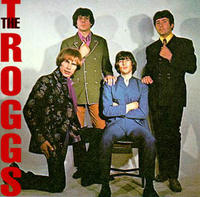
For our first installment of Pharmaceutical Cocktails, we will be covering the song "Any Way That You Want Me." While The Troggs will be forever known in the rock lexicon for their rendition of the Chip Taylor-penned "Wild Thing," and the movie Love Actually returned "Love Is All Around" to the mainstream's conscience, "Any Way That You Want Me" remains a personal favorite of mine.

Released as a single, "Any Way That You Want Me" peaked at #10 on the UK charts in December 1966. Like "Wild Thing," the song was also written by Chip Taylor, but lacks "Wild Thing"'s vocal and musical ferocity. Instead, the song begins with a simple cello foundation, before Reg Presley enters with a heartfelt verse that is the polar opposite to his turbulent "Wild Thing" vocals. The song picks up some of that attitude as the song progresses to the chorus, with the song filling out with addition string accompaniment and hard hitting drums.

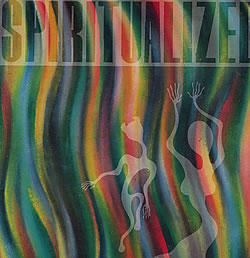
Fast forward 24 years, - Jason (J Spaceman) Pierce breaks ties with Pete (Sonic Boom) Kember and their band, Spacemen 3. Spacemen 3 were no strangers to 1960s garage/psychedelia, drawing musical influences from bands such as MC5, Red Krayola, Thirteen Floor Elevators, and others. After leaving Spacemen 3, Pierce formed Spiritualized. Dedicated to Pierce's then-love interest, Kate Radley, the band released a cover of "Any Way That You Want Me," as Spiritualized's introduction to the world.

And quite an introduction it was. Spiritualized's high octane version of the song makes The Troggs' version look like a demo in hindsight. Clocking in at nearly six and a half minutes, Spiritualized kicks off the song in a similarly subdued manner as The Troggs, but, as each verse turns to chorus, the song picks up more and more momentum. The band achieves a very full sound without the song sounding cluttered. It is this cohesiveness that allows each layer of the song stand together without getting lost in shuffle.

The Troggs
"Any Way That You Want Me"
1966


Spiritualized
"Any Way That You Want Me"
1990

Monday, October 10, 2005

Maybe Tomorrow

On Saturday, drummer Mike Gibbins passed away in his sleep. Gibbins was the drummer of British rockers - Badfinger.

Originally known as The Iveys, the band signed with The Beatles' Apple Records. Prior to signing with Apple Records, The Iveys had performed live with such bands as The Who and The Yardbirds. Their first single was the sappy "Maybe Tomorrow." Despite having an endorsement from the Fab Four and the song sounding cut from the same cloth as many of The Beatles' poppier tunes, "Maybe Tomorrow" failed to have much success on the pop charts.

Deciding a style change was needed, The Iveys changed from being mods to rockers, and changed their band name to Badfinger, passing on McCartney's suggested "Home" and Lennon's "Prix." The band achieved success with the McCartney penned "Come and Get It" as well as "Without You" and "No Matter What".

The band continued recording into the 1970s with their original lineup, until guitarist Peter Ham committed suicide in 1975. Gibbins also left the group after Ham's suicide. From that point, there were attempts to continue, adding Stealers Wheel's drummer and Tony Kaye from Yes, but in 1983 longtime bandmember Tom Evans also committed suicide and the band was no more.

The story of Badfinger is one of the more tragic ones in rock history. With Gibbins' recent passing, lets go back to a happier, more optimistic time in the bands history - back when they were simply The Iveys.

The Iveys
"Maybe Tomorrow"
1969

Thursday, October 06, 2005

Cop out now with me for a borrowed moment

Today we will be covering another song from the great Pebbles Vol. 3 compilation. For those looking for a starting point for delving into obscure psychedelia of the 1960s, this is the disc. Unlike many compilations that are dubbed 'psychedelic,' but end up really being more garage rock than anything else, Vol. 3 (titled: The Acid Gallery) lives up to expectations.

David Diamond was a DJ in Colorado when he recorded "The Diamond Mine" with the band Higher Elevation. The wolf howls opening the song are sign of things to come with this truly demented track. David Diamond doesn't sing, but more accurately speaks over the track in the standard, cheesy 1960s DJ manner. "Peanut butter fudge angel of love" and "the garden of man eating dandelions" are just some of the imagery used by David Diamond who preaches over a steady drumbeat, organ, and various sound effects.

Higher Elevation
"The Diamond Mine"
1967

Wednesday, October 05, 2005

And still the thought remains


I was hoping to have this post up earlier today, but blogger.com was down for some maintence. Better late than never, I suppose. Today's post picks returns to sunny California, 1967, where we meet up with the band - Human Expression.

"Optical Sound" was the second single released by Human Expression. The song may not be as blatantly trippy as this week's previous two songs, but "Optical Sound" has a very tranquil sound. Lead singer Jim Quarles provides the song with a very mellow vocal performance, enhanced by a slight echo effect, that gives the song its eerie personality. The song also boasts some nice electronic noises that are used quite effectively.

Human Expression would end up releasing a third single, "Sweet Child of Nothingness," before calling it quits, but it isn't the song they released that is noteworthy - the song they didn't is. The record label offered Human Expression two songs to take into the studio, and chose the abovementioned song over "Born To Be Wild." Human Expression didn't think "Born To Be Wild" lyrics were up to par, but they certainly must have been distraught after seeing Steppenwolf's huge success with the song.

Human Expression
"Optical Sound"
1967

Tuesday, October 04, 2005

And, I swear, I'll never fly again

Despite having little to no commercial success, Minneapolis' Calico Wall has had a major impact on those the 1960s psychedelic genre. Calico Wall was strictly a studio band, having recorded only one single, 1967's "Flight Reaction" b/w "Beep" for Turtle Records. In 1982, another recording was unearthed, the dark "I'm A Living Sickness."

It wasn't until "Flight Reaction" appeared on the Pebble's Volume 3 compilation that listeners began to appreciate Calico Wall's blend of hypnotic psychedelia and harsh garage punk. The band inspired two 1960s compilations that share their namesake, Beyond the Calico Wall and Before the Calico Wall.

"Flight Reaction" and "I'm A Living Sickness" both share a paranoid darkness, with "Flight Reaction" lyrics detailing fears of flying, and "I'm A Living Sickness" piercing feedback contrasting the background droning. Both songs are fantastically frightening to listen to, and are essential for any fan of 1960s psychedelia. Although they never had commercial success, "Flight Reaction" and "I'm A Living Sickness" are of extreme historical importance, defining an entire genre of music.

"Flight Reaction"
Calico Wall
1967


"I'm A Living Sickness"
Calico Wall
1967


Monday, October 03, 2005

I am looking at the back of my eyelids


Medicinal music is back after a fun-filled three day weekend, and this week will consist of some some songs that are on the edge of sanity. Many garage and psychedelic bands in the 1960s took the sentiments of revolution, spirituality, and freedom into the studio, experimenting with recording methods and instruments to bring listeners something new. I, for one, can't get enough of these zany songs.

Today takes us to southern California, 1967. Brain consisted of Michael Giles, Peter Giles, Allan Azern, and Michael Blakesley. Their only single was "Kick the Donkey", with a trippy b-side, "Nightmares In Red." A year later, the brothers Giles would join Robert Fripp, to form Giles, Giles, & Fripp (pictured above), with Fripp and Michael Giles forming prog-rock legends, King Crimson a year later.

"Nightmare In Red" opens with a seemingly innocent, albeit a little creepy, piano before exploding in to a, um, 'nightmare' of noise, consisting of trombone, guitar, bass, and crashing drums. Shortly, the 'nightmare' subsides (ok, this is my last 'nightmare reference and I apologize for the first two) the piano returns for the verse. The pattern of simplistic piano and chaotic playing gives the song a nice tension and release dynamic.

Brain
"Nightmares In Red"
1967

Thursday, September 29, 2005

There's a strange, quiet girl I'd love to meet

Decades before The Cramps donned a musical style that mixed punk rock with rockabilly, Dean Carter played a similar style of music. Starting out in Champaign, Illinois and eventually moving out west in the late 1960s, Carter churned out high tempo rockabilly/punk songs alongside more straightforward garage/punk numbers. While his musical peak is often pointed to be his 1967 take on "Jailhouse Rock," I have chosen to feature that single's b-side, "Rebel Woman."

"Rebel Woman" is a high paced love letter to those bad girls mothers have warned their son's about, yet are found to be much more attractive and mysterious than the plain Jane. Carter belts out his pleas and desires over a a bed of frenzied garage/punk.

Several years after the release of "Jailhouse Rock" b/w "Rebel Woman, Carter didn't find his "rebel woman," but instead found gospel music, which records under his given name - Arlie Neaville. In 2002, Ace Records released a 28 track compilation of Carter's music entitled Call of the Wild, which spans his whole career as Dean Carter, 1959-1969.

Dean Carter
"Rebel Woman"
1967

Tuesday, September 27, 2005

Today, its Tomorrow


In 1967, Tomorrow shared the spotlight with Pink Floyd's in swinging London, performing at the legendary UFO. Both bands showed great potential, although Tomorrow and the original Pink Floyd line-up didn't last as long as they deserved.

Tomorrow's r&b and psychedelia hybrid sound was a template for many other bands who decided to jump on the psychedelic bandwagon, but many of those bands lacked the musicianship of Tomorrow. Steve Howe, future Yes guitarist, showed his proficiency both in the studio and in the extended jams performed in concert, and John"Twink" Alder, who drummed later with The Pretty Things, The Pink Fairies, and Syd Barrett, provided a strong percussion backbone for the band's sound.

Despite failing to make the pop charts, "My White Bicycle" stands the test of time - easily rated a classic psychedelic track. Lead singer Keith West wrote the song, inspired by community bicycles used in Amsterdam at the time. The song, propelled by Twink's high paced drumming, features some great backwards guitar and strong vocals by West.

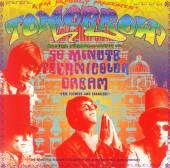
In addition to "My White Bicycle," below you fill find a link to their live cover of "Strawberry Fields Forever." The song comes from the December 1967 Christmas On Earth concert , and can be found on 50 Minute Technicolour Dream. 50 Minute Technicolour Dream is a great companion piece to their LP, featuring previously unreleased studio and radio session cuts, as well as 7 other live songs from the Christmas On Earth concert. The cover, which apparently received the seal of approval from John Lennon, is more aggressive than the original, and is an interesting listen, as The Beatles never performed the song live.

For more information about Tomorrow, as well as Twink's involvement in The Pretty Things and The Pink Fairies, check out his website.

Tomorrow
"My White Bicycle"
1967


Tomorrow
"Strawberry Fields Forever" (live)
1967

Monday, September 26, 2005

Oompa Koobas

Despite being formed in 1963 and releasing a handful of singles, it was until 1969 that Koobas (at one time The Kubas) released their first and only LP. Sadly, for Koobas never shared the commercial success of a fellow Liverpudlian band, whom they opened for in 1965, as well as shared manager Brian Epstein.

Today's song is "Royston Rose", the opening track from their eponymous LP. "Royston Rose" is simply a great late-sixties jam - extended guitar solos, fuzz bass, and some hot drumming by Tony O'Reilly, who drummed for Yes for a very short time after Koobas split.

Although Koobas released only one full-length album during their existence, in 2000 the album was re-released by Beat Goes On. Included on the re-release are all of the A and B sides Koobas released in their build up their only LP.

Koobas
"Royston Rose"
1969

This Is Uncalled For

Welcome to week two of Medicinal Music. I was intending on posting a weirder, more psychedelic song today, but I found this instead. I'll admit that 65% of the reason I chose to write about this song is because of the band name - Uncalled For. For some reason, I find the it to be an insanely clever name...imagine a radio DJ or a concert announcer introducing them - "Ladies and Gentlemen, this is Uncalled For!"

Nashville's own Uncalled For (not to be confused with Johnny and The UNcalled Fours from Ohio) released "Do Like Me" in 1965. This would be the only single Uncalled For released, although they recorded a couple demos in 1966 that have surfaced. The song starts out with a very mellow tone, sparse rhythm guitar is paired with some drums and trance inducing background vocals underneath the lead singers cool delivery. During the first verse, the singer asks us if we've "ever had a day the man's kept you down?" Well of course we have! What should we do?

Ah ha! The answer kicks in during the chorus, and so does the song's energy -
"Come on over/I'm gonna show it to you/Everything I know, girl/Everything to do...Do Like Me." Unfortunately for listeners, as enjoyable as the song is, one can notice that the band seems to be a little subdued in the studio. It begs a listener to imagine what kind of raucous this chorus would have caused in the bars of Nashville. Overall, this song has a great feeling of stoned subversiveness, sexuality, and cockiness that has a listener nodding their head in approval.

"Yeeaah"

Uncalled For
"Do Like Me"
1965

Friday, September 23, 2005

Friday on My Mind

Known as the "Australian Beatles," The Easybeats made their first mark on the UK music scene in 1966 with "Friday On My Mind." The song, recorded with Kinks producer Shel Tamly, even caught the attention of actual-Beatle Paul McCartney, who, legend has it, heard the song while driving and pulled over to call the station to find out whose song it was.

When listening to the song, its not hard to hear what sparked McCartney's attention. The universally relatable lyrics, racing guitar, and Beatle-esque backing vocals make this song two minutes and forty three seconds of pure Australian bliss.

Although The Easybeats only lasted five years, they managed to score fifteen Top 40 hits in Australia. David Bowie showed his love for "Friday" by covering The Easybeats' tune on his 1974 Pin Ups album. In 2001, The Australian Performing Rights Association rated "Friday On My Mind" as Australia's best song of all time. Not bad for a bunch of guys singing about Friday.

For more information about The Easybeats, check out this very informative website.

The Easybeats
"Friday On My Mind"
1966

Thursday, September 22, 2005

I woke up this morning and I didn't feel so good.

With Hurricane Rita closing in on the Houston, Texas area, I thought it would be appropriate to cover one of Texas' many contributions to the mid-late 1960s psych/garage scene - The Moving Sidewalks. Formed in 1966, The Moving Sidewalks were influenced by fellow Texans - Thirteen Floor Elevators and their single "You're Gonna Miss Me." This inspiration led to their debut single "99th Floor," a title paying homage to the Elevators.

The influence of the Thirteen Floor Elevators can be heard in the recording of "99th Floor," as evident in Bill Gibbons' wailing vocals, the distorted rhythm guitar, and the utilization of the harmonica. The Moving Sidewalks' blues influence is also heard in the song's guitar solo.

"99th Floor" achieved some local chart success for The Moving Sidewalks, although the song failed to catch on nationwide. The band gained some success through covering The Beatles' "I Want To Hold Your Hand" as well as supporting Jimi Hendrix during his band's 1968 tour of Texas. After a few band members left for Vietnam, Bill Gibbons and The Moving Sidewalks called it a day in 1969. This would not be the last Texas and the world would hear of Bill Gibbons - later that year, Gibbons hooked up with Dusty Hill and Frank Beard to form ZZ Top.

The Moving Sidewalks
"99th Floor"
1967

Wednesday, September 21, 2005

My head's burning in confusion

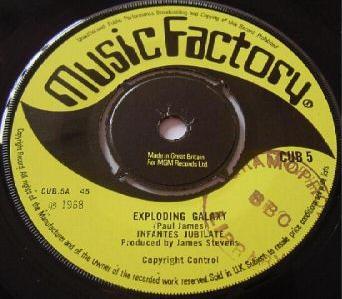
If there is one thing that can be said about music in the late 1960s is that it made strange bedfellows. Take, for instance, today's featured song "Exploding Galaxy" by Infantes Galaxy. Released in October '68, "Exploding Galaxy" reached number one in the singles charts in the UK, as well as being dubbed "Disc of the Week" by The Record Mirror. The success of this song can be attributed to the contribution by producer James Stevens.

James Stevens, coming from a more traditional musical background, had won the Royal Philharmonic Prize for his first composition, as well as winning "Composer of the Year" while studying at the Guildhall School of Music in London. Stevens brought his experience to the recording studio, creating an beautiful orchestration, based on Beethoven's 7th Symphony.

The song's horns and strings make "Exploding Galaxy" a refreshing alternative to the wah-wah pedals and sitars usually associated with mid-late 60s psychedelia. The vocals are also very un-psychedelic. Instead of being laden with effects, the vocals are very clean and the singer hams it up almost to lounge singer status. I guess you could label the record "anti-psychedelic psychedelic music."

For more information on James Stevens, follow this link to the Churchill Society, where he is the Head of Music of the Society.

Infantes Jubilate
"Exploding Galaxy"
1968

Monday, September 19, 2005

Came the dawn and you were gone...

Originally recorded by the California-based band The Electric Prunes, "I Had Too Much To Dream (Last Night)" was penned by songwriting duo Annette Tucker and Nancie Mantz. The surreal song was a bit of a departure for the two, who previously wrote songs recorded by Tom Jones, Sonny and Cher, and The Brady Bunch. The Electric Prunes' recording reached as high as #11 in the pop charts,but and while the song is a little trippy, it showed only a glimpse of the song's psychedelic potential.

It wasn't until Rasputin and the Mad Monks recorded the song in late 1967 that "I Had Too Much To Dream (Last Night)" reached its freak-out peak. This song is auditory acid. From its introductory countdown and lift off to the echo and sound effect heavy outro, the song sound as if it were recorded by someone who had too much of one thing or another last night. Lead singer Bob Raymond gives a powerful vocal performance, and avoids being lost in the midst of the song's layers of fuzz and sci-fi effects. During the song's freak-out (about 2/3 of the way through the song) you can hear backwards vocals, which if reversed reveal the band chanting "I had a dream last night," "psychedelic lollipops," and singing "Rock-a-bye Baby" amongst other gibberish.

Many cover songs sound redundant when placed side by side the original recording. But unlike many bands, Rasputin and the Mad Monks did a great job of interpreting the Electric Prunes' song by bringing something more to the table. Sure, a recording like this won't get you the #11 spot on the pop charts, but, nearly forty years later, the Mad Monks' version gives you a much better listening experience. Listeners are able to appreciate something hidden or previously unrecognized with each listen.


Rasputin and The Mad Monks
"I Had Too Much To Dream (Last Night)"
1967

A Change Is Gonna Come


Just wanted to let everyone know that the blog is currently being revamped and unless there are unforseen technically problems, the first post of the new and improved Medicinal Music will be up by later tonight! Hope you enjoy the new format.

Dr.Moshe